


Aged Care
Build Your Support Circle When You Are Caring at Home
November 24, 2025
Read more
How to Choose the Right Patient Lifting Equipment for Home Care

Selecting the right patient lifting equipment requires careful assessment and planning to ensure safety, dignity, and independence in home care settings.
The right lifting equipment transforms daily transfers into safe, smooth experiences that promote independence while protecting both patients and carers from injury.
A proper assessment is essential before selecting any patient lifting equipment. The purpose is to understand how much the person can safely contribute during transfers, including whether they can take some of their own weight with assistance or require a full mechanical lift.
A comprehensive mobility or manual handling assessment typically considers:
Australian regulators, including Safe Work Australia and the NDIS Commission, advise that mechanical aids such as hoists and transfer equipment can help reduce the physical demands of lifting and supporting people when used correctly.
Mobility and handling plans should be reviewed regularly. This typically occurs every twelve months or sooner if the person’s needs or environment change.
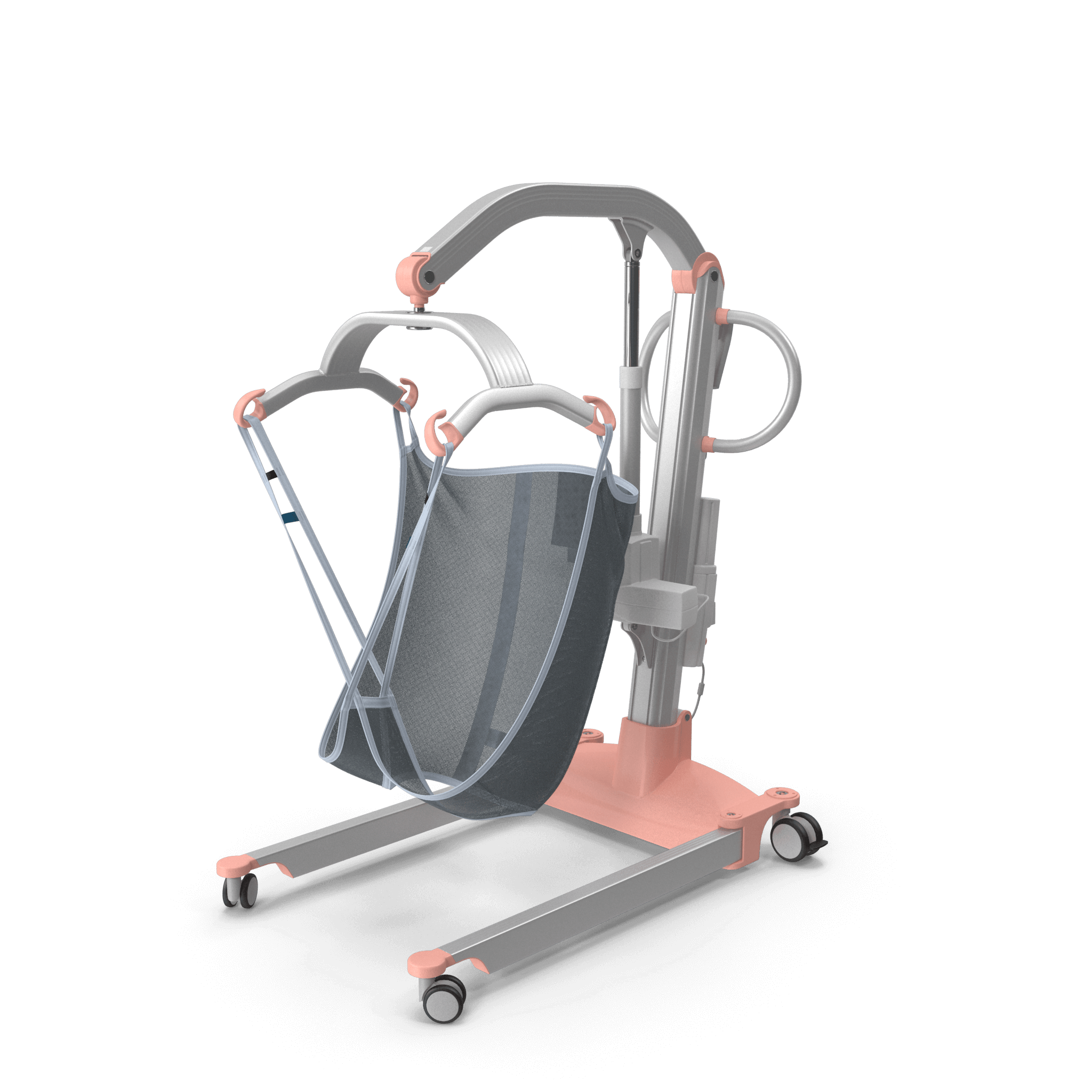
Patient lifting equipment is available in several categories, each designed for different mobility levels and home environments.
Manual floor hoists use a hydraulic pump operated by the carer. They are commonly used for full lifts with a sling and require physical effort from the carer.
Electric floor hoists are powered by a rechargeable battery and provide assisted lifting with minimal physical effort. They use a full-body sling and are often chosen when transfers occur frequently throughout the day.
Ceiling hoists run on a track mounted overhead and free up floor space. They provide consistent lifting paths within or between rooms. Installation requires a structural assessment. Portable gantry hoists offer a non-permanent alternative where ceiling mounting is not appropriate.
Sit to stand lifters are suited to people who can take some of their own weight and need support to rise from a seated position. They encourage functional movement but are not suitable for people who cannot weight-bear.
Portable or compact hoists include foldable, travel or lightweight models designed for small homes or easy transport.
Bathroom-specific lifting devices support transfers in wet areas such as showers and over toilets. These may include hygiene chairs, tilt-in-space shower chairs or devices designed to support stable positioning on slippery surfaces.
Fall recovery devices assist with safely raising a person from the floor after a non-injurious fall. Some devices use inflatable cushions to elevate the person gradually, while others are mechanical floor lifts suitable for home use.
Slings are essential for safe lifting. Types include general purpose slings, hygiene slings, pivot slings, bariatric options, amputee slings and standing slings for sit to stand devices. Sling selection depends on body shape, mobility needs and the lifting device being used.
Integrated systems combine several care functions such as lifting, seated positioning and hygiene access into one powered unit. These systems reduce the number of separate devices needed in the home. Behn is an example of an integrated system that provides assisted transitions between lying, seated and bathroom positions within a single piece of equipment.

Traditional home care can involve using several separate pieces of equipment such as mobile hoists, shower commodes, wheelchairs, transfer boards, slide sheets and slings. Managing multiple items can add complexity to daily routines, particularly in small or busy home environments.
Behn is designed as an integrated system that brings several daily care functions into one unit. It provides a single piece of equipment that:
Because the system combines several functions, some households may find that it reduces the need to manoeuvre or store multiple pieces of equipment. In homes with limited space, an integrated system may offer a more streamlined way to support daily care tasks.
As with all assistive technology, suitability depends on the person’s mobility needs, the home environment and clinical considerations. An occupational therapist or qualified assessor can help determine whether Behn or any other lifting or transfer equipment is appropriate for the individual’s circumstances.

A safe environment supports effective and predictable use of lifting equipment.
Key considerations include:
Routine checks help keep equipment in good working order. This may include inspecting slings, cleaning frames, checking attachments and following manufacturer maintenance schedules. Carer training supports safe equipment use and helps reduce the physical demands of daily transfers.
Choosing the right patient lifting equipment starts with understanding the person’s mobility, care needs and home environment. With appropriate assessment and suitable equipment, daily transfers become safer and more manageable for both the person and their carers.
Traditional lifting devices like manual hoists, electric hoists and sit to stand lifters remain essential in many home environments. Integrated systems such as Behn provide an alternative option for households that prefer a single device to support lifting, seated positioning and hygiene-related activities.
Occupational therapists and qualified assessors can provide guidance on which equipment is most appropriate for the individual’s needs, ensuring safety, comfort and long-term suitability.