Guide
Ageing in Place: A Practical Guide for Caring for Your Partner at Home
Read more
Learn how to plan, fund and create a safe, independent home for ageing in place. Explore home modifications, assistive technology, support services and trusted care programs.


Ageing in place means staying in your own home or community while receiving the supports you need to remain safe and independent. Research from the Australian Institute of Health and Welfare shows that most older Australians prefer to stay at home. Familiar surroundings protect routine and reduce confusion, especially during periods of change.
For partners, ageing in place allows you to:
Ageing in place works best when there is early planning. This might include thinking about home layout, mobility needs, equipment and family support. Many couples find that planning early helps reduce stress and prevents rushed decisions after an injury or hospital stay.
Health and wellbeing play an important role in helping couples continue living safely at home, even when health needs change. Many couples are managing health conditions, changes in mobility or fluctuations in energy, and it is common for one partner to take on more daily support. Both people benefit when routines, meals, movement and emotional wellbeing are looked after together.
Spouse-carers are often the first to notice changes, yet your own health also needs attention. Caring becomes safer and more sustainable when both partners feel supported in their physical and emotional wellbeing.
Helpful habits include:
Supporting each other to stay as active as possible helps protect independence for both partners.
Changes in mood, memory or motivation are common with ageing. As a partner, you might notice:
Shared routines such as gentle conversation, morning check-ins, short walks or familiar activities can help both partners feel steadier. If either of you shows ongoing changes, speak with your GP. Support is available through psychologists, counsellors and community programs.
Nutrition is important for strength, immunity and energy, especially when health conditions affect appetite or routine. Helpful approaches include:
Meal support services, such as Meals on Wheels, can assist when cooking feels tiring or difficult. Many couples find that planning simple meals ahead of time makes daily routines easier and ensures both people are eating consistently.

Caring for your partner can feel personal and private, but you do not need to manage everything on your own. Strong support networks make ageing in place more sustainable and protect the wellbeing of both partners. Australian research from Carers Australia shows that carers with reliable social support report higher wellbeing, less stress and lower risk of burnout.
Support can come from many places. Even small contributions from others can make daily life easier.
These people can help with errands, appointments, meal preparation or regular check-ins. Even one or two tasks a week can make a meaningful difference.
These activities create variety, routine and purpose.
Carer Gateway offers:
Carers often feel guilty asking for help, but support protects both your health and your partner’s long-term ability to stay at home.
☐ Three people I can contact quickly in an emergency
☐ One regular group, activity or social routine I take part in
☐ Someone who checks in with me or my partner each week
☐ A plan to stay connected digitally
☐ A backup person who can step in if I need a break
☐ Contact details for local services saved in an easy-to-find place
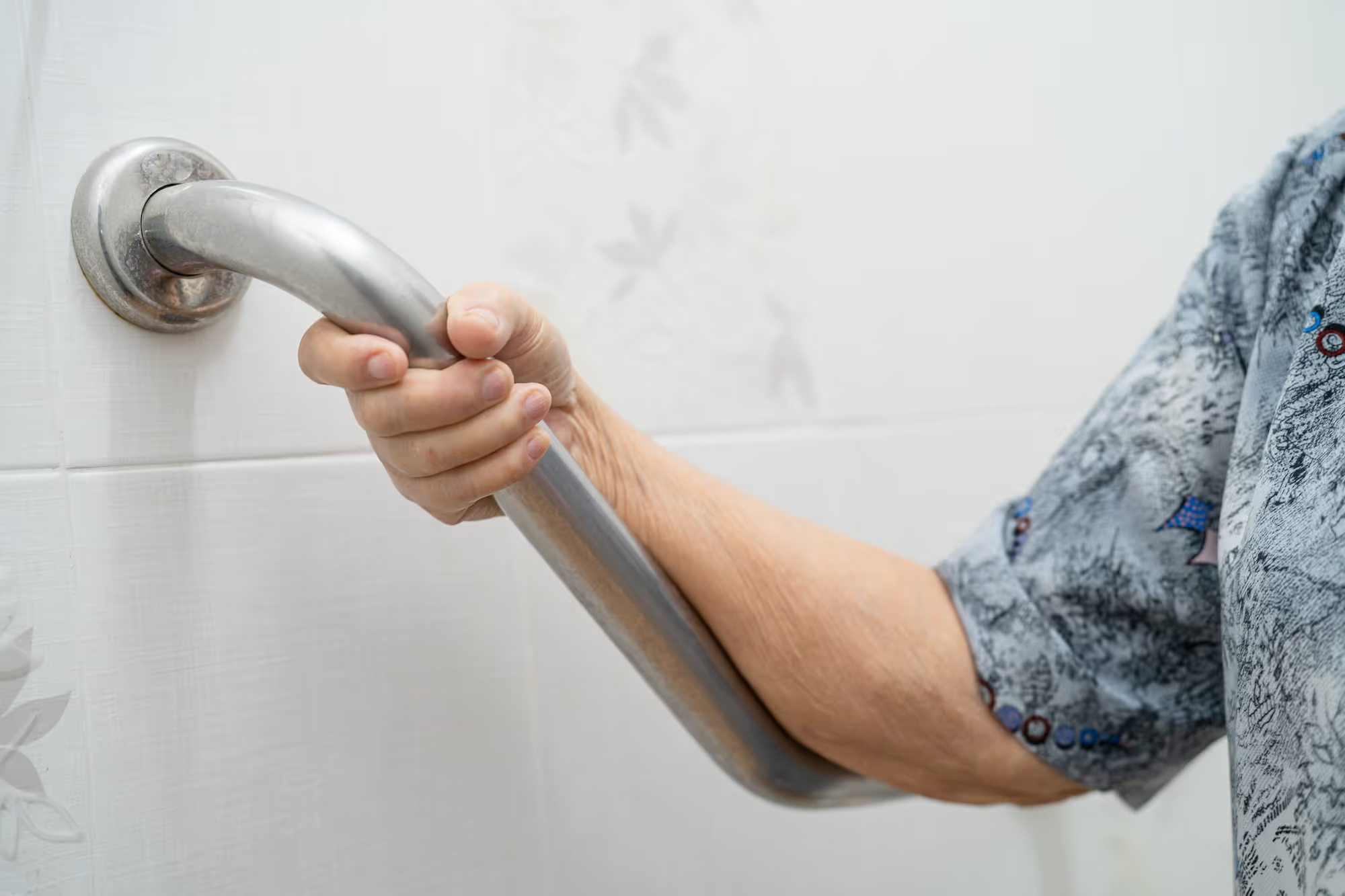
When you’re caring for your partner at home, safety and comfort become key parts of daily life. Small changes around the house can reduce strain and help prevent falls. The Australian Institute of Health and Welfare reports that falls are the leading cause of injury-related hospitalisations for older Australians, and many occur in or around the home. Creating a safer environment helps protect both of you and supports your ability to keep living well at home together.
Bathrooms are high-risk areas. Small upgrades help protect both you and your partner.
A safer home reduces your physical effort and supports your partner’s confidence.

Assistive technology (AT) refers to tools and equipment that make everyday tasks easier and safer. AT supports independence and reduces the physical load on spouse-carers.
An occupational therapist can assess movement, strength, home layout and safety. This ensures the equipment you choose is appropriate and safe. They can also teach you how to use equipment without risking your own health.
These tools help with fatigue, balance and mobility.
Sometimes your partner may need more structured support during movement. This often becomes clear during transfers such as getting out of bed or moving to the bathroom. Repeated lifting or awkward guiding puts spouse-carers at risk of strain and injury.
Safe manual-handling guidelines recommend using powered or mechanical aids when physical effort becomes significant.
Behn is designed for partners who need reliable support with everyday transfers and personal care. Instead of managing multiple separate pieces of equipment, Behn brings together a home care bed, a supportive seated position for care tasks, and showering and toileting functions in one integrated system. This creates a smoother routine for both of you and reduces the physical effort required from a spouse-carer.
Benefits for spouse-carers include:
For many couples, integrated equipment like Behn supports safer daily care and can help maintain the ability to continue living at home together.
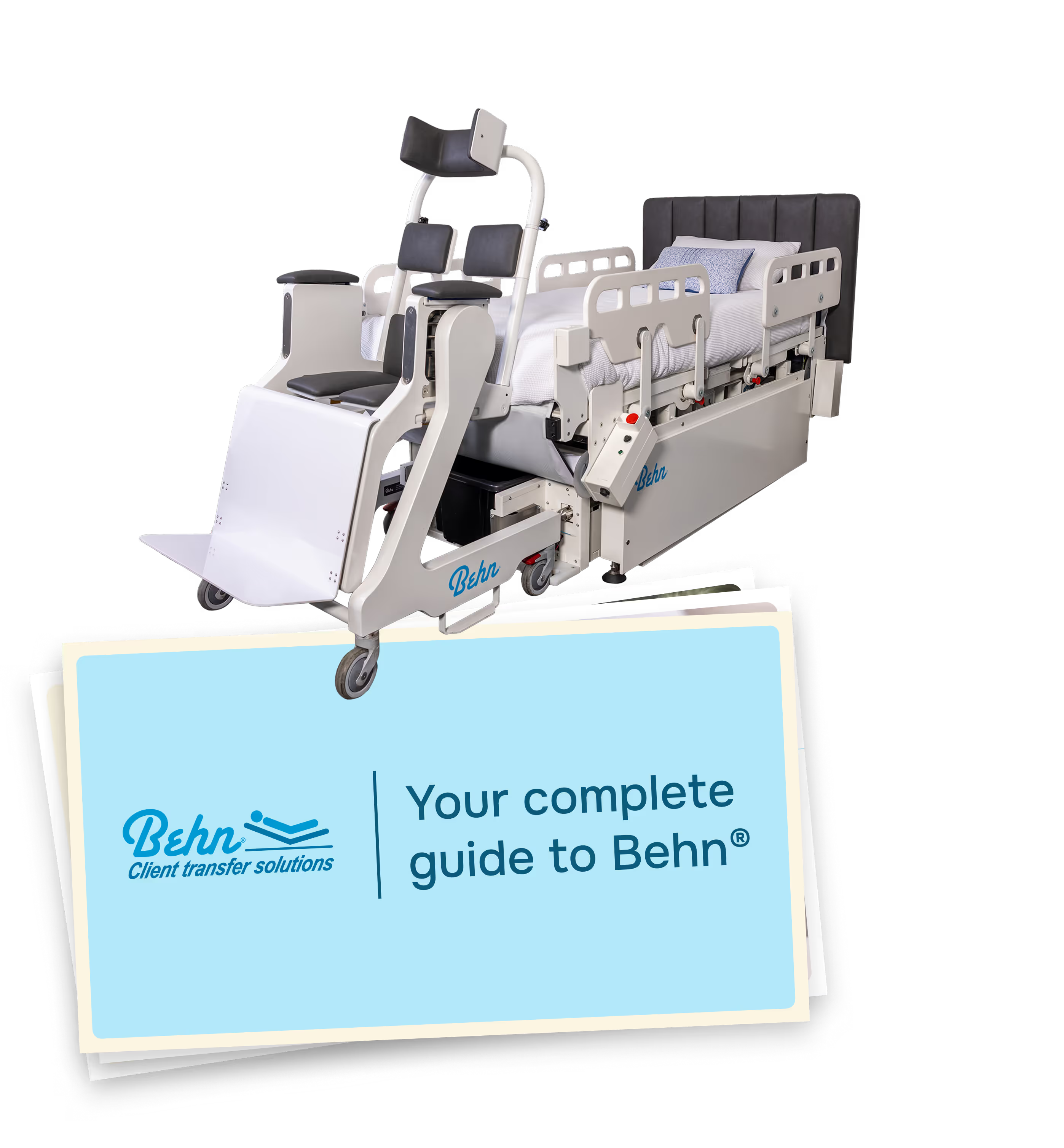
The Aged Care Guide to Behn explains how our system works, what makes it different, and how it may support care at home.
Most couples want to stay at home together for as long as possible. Ageing in place is suitable when the home is safe and you have enough support.
Staying at home works well when:
Residential aged care may be appropriate when:
My Aged Care assessments help determine which supports you are eligible for. You can request an assessment by calling 1800 200 422. Involving your partner, family members and your GP ensures a balanced and well-informed plan.
Explore Behn’s comparison guide to see how staying at home with the right equipment compares to residential aged care, and what may be safest and most sustainable for your situation.

Caring for your partner at home can involve costs such as equipment, home modifications or personal care services. Planning ahead helps you understand what support is available and what you may need to contribute.
The Support at Home program is the main way older Australians receive government-funded help at home. It replaced the old Home Care Packages and Short-Term Restorative Care programs.
It may include:
Information: https://www.health.gov.au/our-work/support-at-home/about
This scheme sits alongside Support at Home and provides separate funding for equipment and home modifications.
Examples include:
More information:
https://www.health.gov.au/our-work/support-at-home/assistive-technology-and-home-modifications-at-hm-scheme
CHSP offers entry-level support such as:
It continues to operate and will transition into Support at Home in the coming years.
Information: https://www.health.gov.au/topics/aged-care/about-aged-care/commonwealth-home-support-programme-chsp
Most states and territories offer subsidised or loaned aids and equipment.
Examples include wheelchairs, mobility aids, modified seating and some home modifications.
Some helpful links to state-based programs/ providers:
New South Wales – EnableNSW Aids and Equipment Program
Northern Territory – Territory Equipment Program
Queensland – Medical Aids Subsidy Scheme (MASS)
South Australia – Equipment Program (SA)
Tasmania – TasEquip Community Equipment Scheme
Victoria – Victorian Aids and Equipment Program
Western Australia – Community Aids and Equipment Program
Available for eligible people under 65 living with permanent and significant disability.
May include equipment, home modifications and support services.
Information: https://www.ndis.gov.au
Some policies offer rebates for equipment, physiotherapy, nursing or home support services. Check directly with your insurer.

Ageing in place allows you and your partner to remain connected to the life you have built together. With the right support, many couples continue to live safely and comfortably at home for years. Reliable equipment, a supportive network and thoughtful planning ease the physical and emotional load.
Caring for a partner is more sustainable when you share responsibilities and use practical supports. Bringing in family, using community services and choosing advanced technology such as Behn can help you continue caring with confidence.
You do not need to manage everything alone. With the right guidance and tools, you can support your partner to live well at home while also protecting your own wellbeing.
Our guides offer clear, detailed explanations of key home-care decisions, combining expert insights with practical steps to help families plan safely and adapt as needs evolve.
Explore your options with a quote or a guide. Our team is here to help you understand what care at home could look like.