Guide
Ageing in Place: A Practical Guide for Caring for Your Partner at Home
Read more
This guide explains the main types of patient lifting equipment and the some of the considerations that help determine the most suitable option for your care needs. It draws on Australian guidelines and reliable sources so you can explore each area in more depth.
Supporting someone with reduced mobility involves helping them move safely into positions needed for rest, comfort, hygiene and daily living. Without the right equipment, these moments can place significant physical strain on both on carers and people being cared for, making everyday harder than it needs to be.
This guide outlines the main types of patient lifting and transfer equipment used in Australia, how mobility needs are assessed and what to consider when choosing the right solution. It also highlights newer innovations, including integrated systems like Behn, which are designed to reduce manual effort for carers, streamline daily routines and support safe, more comfortable care at home.

Everyday transfers – getting in and out of bed, moving into a chair, using the toilet or shower – can involve significant physical effort and create emotional strain for both the carer and the person receiving care.
Safe Work Australia classifies lifting and moving people as a “hazardous manual task” because it can contribute to musculoskeletal disorders, and recommends using mechanical aids and assistive equipment as a key way to reduce risk for workers and carers.
The emotional impact is also considerable: the 2025 Carers Australia Carer Wellbeing Survey found that 31% of Australian carers reported high psychological distress, 3x more compared with the average adult.
When the right lifting equipment is in place, it can:
Before patient lifting equipment can be chosen, it’s essential to understand how the person moves in their daily life. This step focuses on the individual – not the equipment – and builds a clear picture of their mobility, stability, balance and handling needs across everyday activities.
The aim is to build a complete picture of:
This understanding helps clarify which movements feel secure, where extra support is needed, and what situations may increase the risk of strain or falls.
Key mobility considerations include:
This stage is about building the person’s functional profile. It forms the foundation for selecting equipment, ensuring choices are based on real movement patterns and risks rather than a generalised assumption.
Guidance such as WorkSafe Victoria’s Transferring People Safely handbook reinforces the importance of considering physical, cognitive and environmental factors when assessing mobility and determining the safest way to support movement.

Once a person’s mobility and support needs are understood, the next step is choosing equipment that is safe, suitable and realistic to use in the home. This is where healthcare professionals – usually occupational therapists (OTs) and physiotherapists – play a key role.
OTs work with families to turn complex needs into a clear, practical equipment plans. This is a collaborative process where the person, their carer and the clinician work together to find solutions that support movement with safety, dignity and independence.
Healthdirect notes that during an occupational therapy appointment, the therapist will ask what activities you can do, what you find difficult and what you want to achieve, then work with you on strategies to make daily life easier.
Healthcare professionals support families by:
When assistive technology such as lifting equipment is included in an equipment plan, a clinician may need to complete a prescription. This is not a medical prescription like a medication. It is a formal clinical recommendation that outlines the person’s needs, the type of equipment required and how it should be sized, configured and used safely in the home.
A prescription typically includes:
The prescription helps ensure the equipment is suitable for the individual, matches their mobility and handling needs, and can be used safely by the person and their carers. In programs such as the NDIS and My Aged Care, this prescription is often used to support funding requests or approvals, but the clinical assessment itself is the primary step.

People in Australia can access assistive technology, including patient lifting and transfer equipment, through a range of options. These include self-funding, government pathways such as the NDIS and My Aged Care, and access models like trials, short-term hire or loan programs.
Many families choose to self-fund equipment, especially when:
Even when paying privately, clinical input is still recommended to ensure the equipment is the right type, size and setup for the individual’s needs and abilities.
The NDIS may fund lifting and transfer equipment as assistive technology when it supports daily living, mobility or safety at home. For higher-risk items, the funding request usually needs to be supported by a clinical assessment and prescription from a qualified AT assessor (usually an OT). The prescription provides the NDIS with the justification that the equipment is appropriate and configured safely for the individual.
Higher-risk items typically require:
More detail is available in the NDIS Assistive Technology guidance.
Under the Assistive Technology and Home Modifications (AT-HM) Scheme, My Aged Care may fund lifting and transfer equipment when it supports a person to remain safe and independent at home. Similar to the NDIS, requests generally rely on a clinical assessment and prescription confirming that the equipment is the correct type, size and setup for the individual.
The AT-HM guidelines state that equipment with safety considerations or specific configuration requirements, including hoists, lifters and slings, should be:
Requirements are outlined in the government’s AT-HM Scheme Guidelines
Before deciding on funding or purchase, many people explore equipment through:
Trials:
Short in-home or clinic demonstrations arranged by an OT or supplier to check comfort, fit and ease of use. For higher-risk AT, the NDIS Assistive Technology Guidance supports the use of trials or short-term rental as part of gathering evidence for the appropriate device. Trials are also consistent with the AT-HM Scheme’s emphasis on correct selection, assessment and configuration.
Short-term hire:
Short-term hire is commonly available for hoists, lifters, commodes, wheelchairs and hospital beds. Hire is useful after hospital discharge, during temporary changes in mobility, or when testing equipment before requesting NDIS or aged-care funding. The NDIS allows rental to be used specifically to trial AT that is new to a participant.
State-based loan programs:
Some areas offer short-term loan schemes or equipment libraries (availability varies by region).
Examples include:
Other states and territories may offer loans through community organisations, disability groups or local councils.
Most reputable suppliers offer:
In Australia, the terms patient hoist and patient lift are often used interchangeably. Healthcare professionals commonly use “hoist”, while many suppliers and consumer resources use “lift”.
Both describe mechanical devices that support safe assisted movement when a person requires help with transferring, repositioning or maintaining stability.
Here is an overview of the main types of patient lifting and assisted-movement equipment commonly prescribed or used in home care.
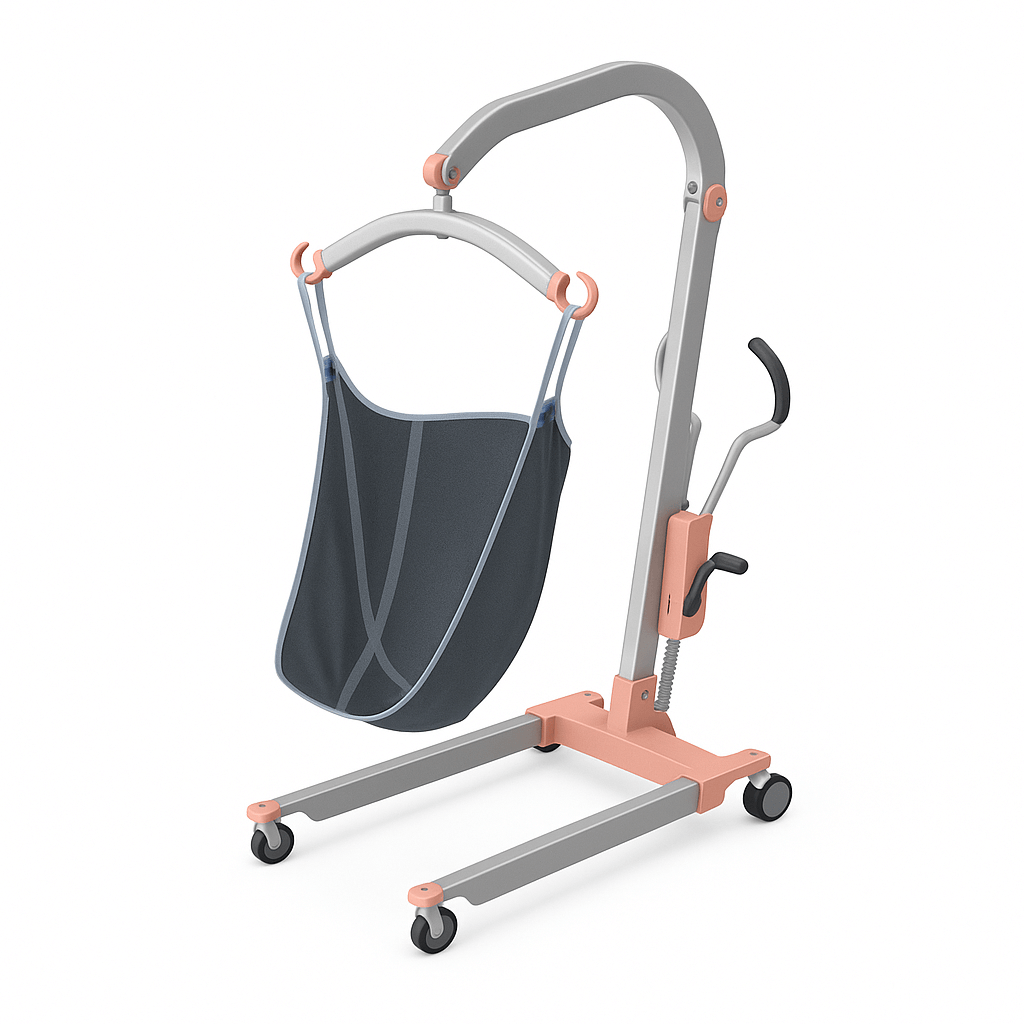
Manual lifters use a hydraulic pump handle operated by the carer. They provide full-body lifting when used with a sling but require physical effort and adequate space to move around furniture and through doorways.
Who it is for
Considerations
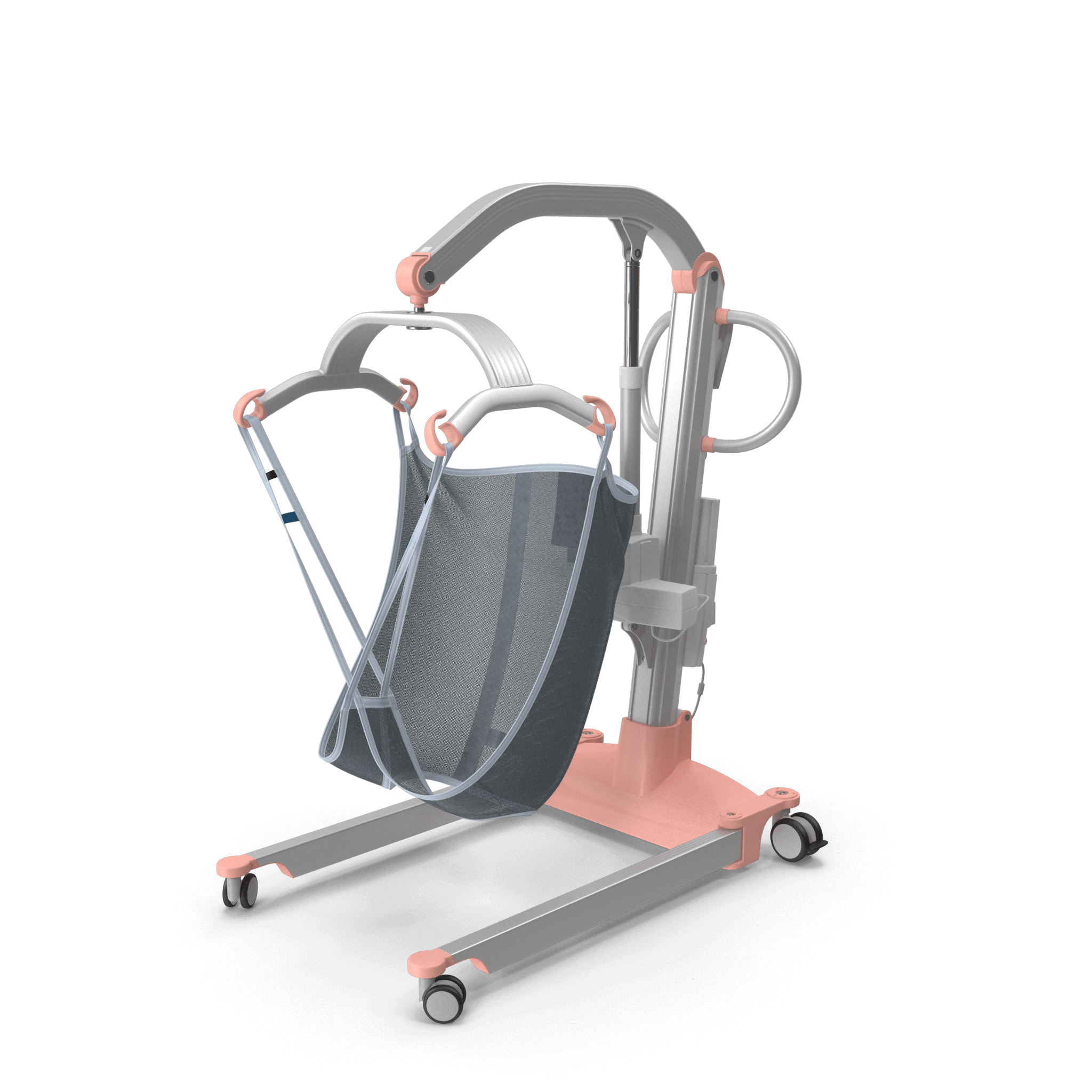
Electric lifters use a rechargeable battery and powered actuator to raise and lower the person. Because the lifting is powered, they reduce the physical effort required from carers and are often chosen for regular, day-to-day transfers.
Who it is for
Considerations
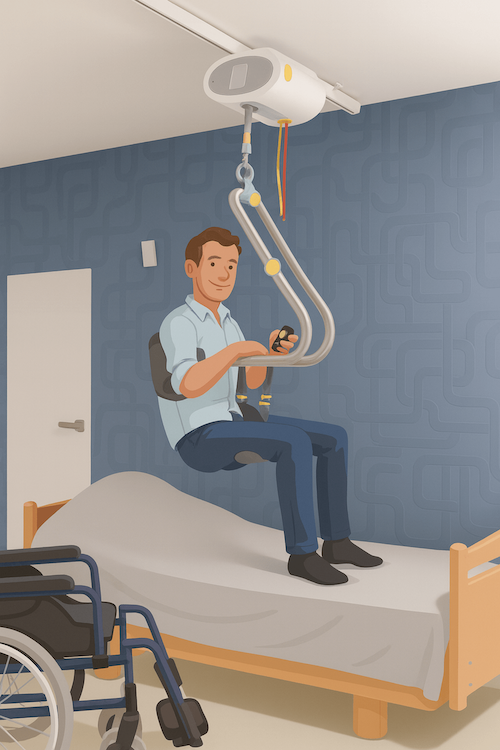
Ceiling systems run on a fixed track or portable gantry above the floor, which reduces the need to push equipment over carpets or tight spaces. Australian government agencies such as Safe Work Australia provide specific guidance on safe use, weight limits, installation and hook design for these systems.
Who it is for
Considerations
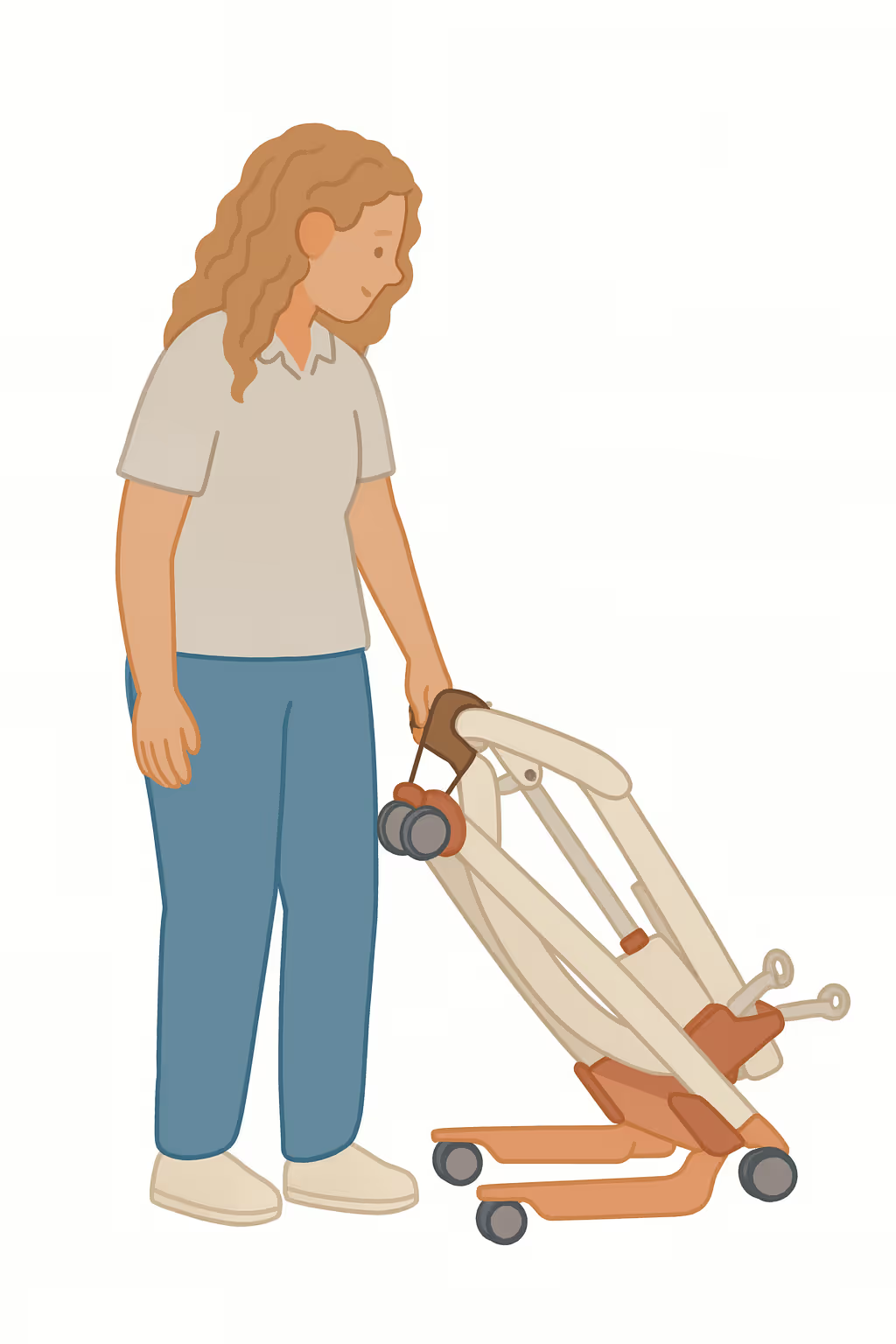
These include foldable or lightweight designs that can be stored more easily or transported between locations. They can be useful in smaller homes or for short-term and transitional care, but still require careful assessment and setup.
Who it is for
Considerations
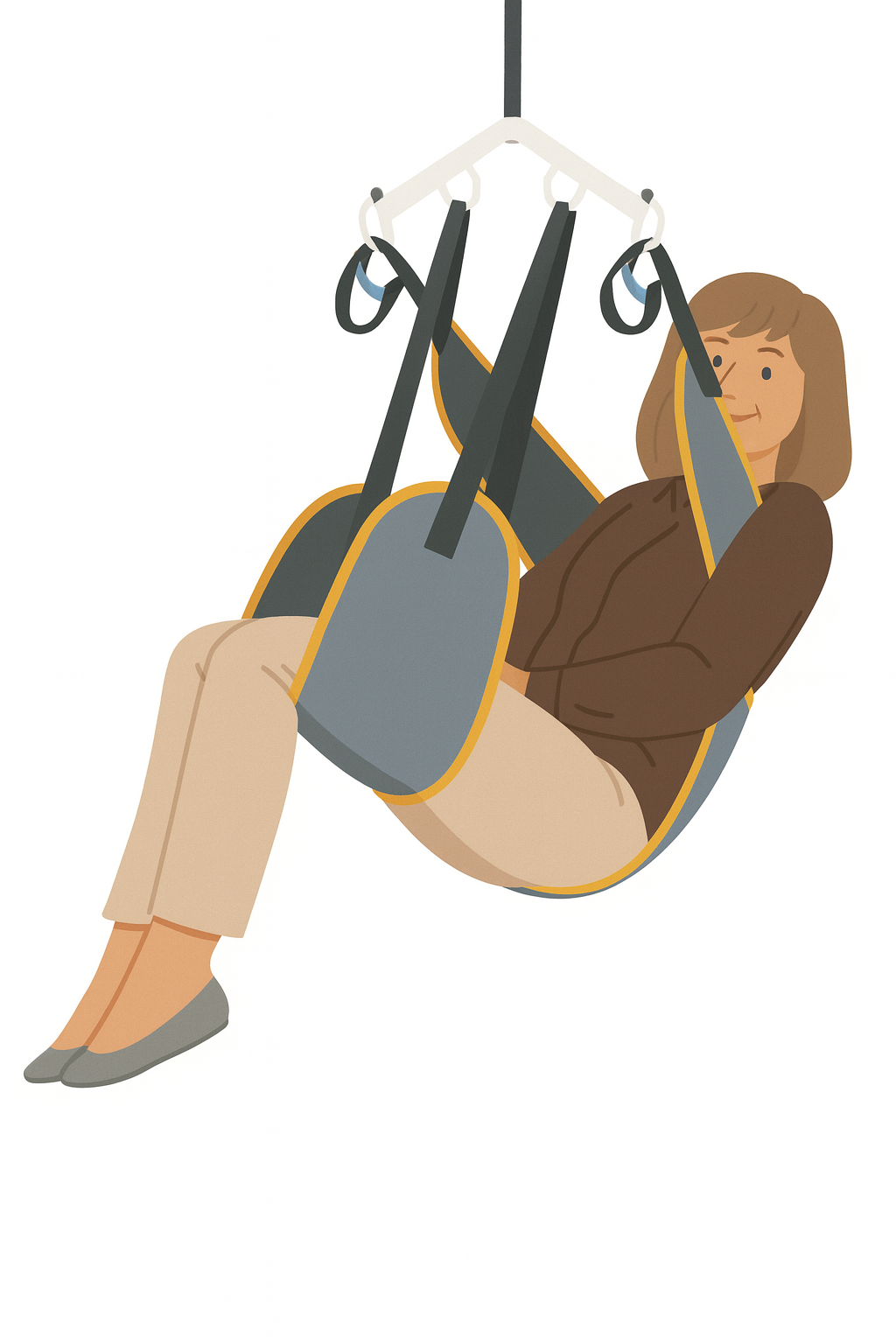
Patient transfer slings are a critical part of any hoist or lift system. They connect the person to the equipment and determine how safely and comfortably the transfer can be completed. A correct sling is just as important as the hoist itself: the size, style and attachment method directly influence posture, stability, pressure risk and overall safety during lifting.
Slings must always be selected, fitted and reviewed by a trained clinician or qualified assessor as part of the equipment prescription.
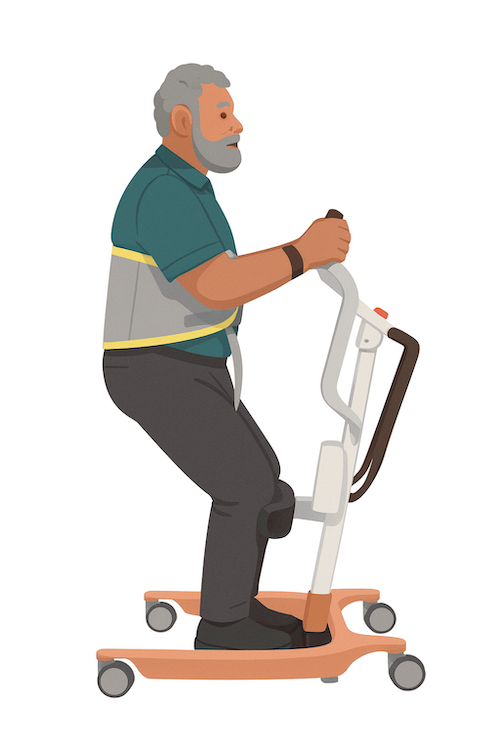
Sit-to-stand devices support people who can take some weight through their legs but need help moving from sitting to standing. They are commonly used for toileting or short-distance transfers and are not suitable for people who cannot weight-bear at all.
Who they are for
Not suitable for
Considerations
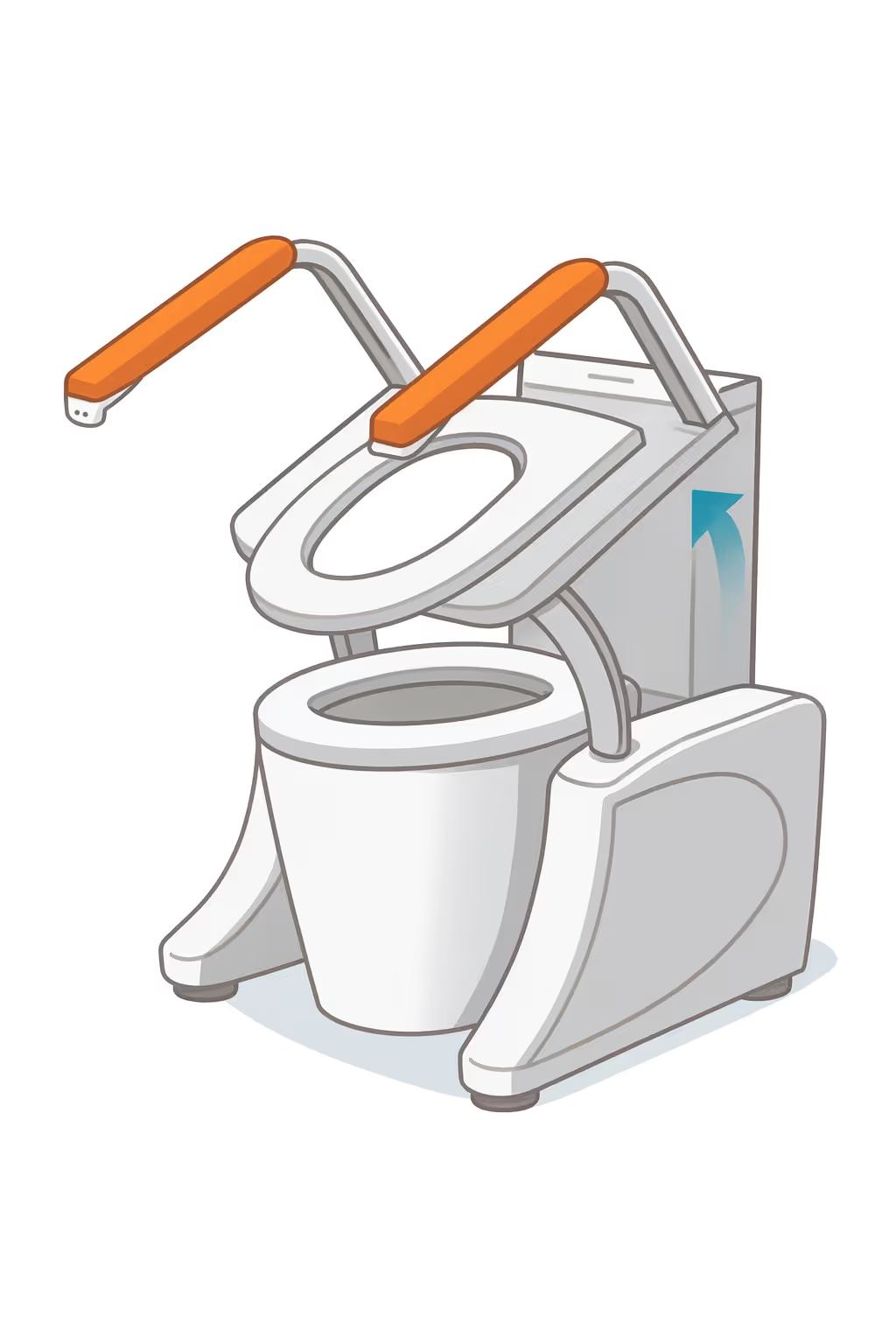
Bathroom spaces bring a higher risk of slips and falls, so lifting and hygiene equipment must provide stable support, controlled positioning and safe access during toileting and showering. Clinicians choose bathroom equipment based on the person’s mobility, postural needs and skin integrity, as well as the layout and hazards of the wet area.
Some bathroom equipment involves direct lifting (such as hoist-to-commode transfers or toilet lifting devices). Other items provide seated support for washing, toileting or showering when standing is unsafe.

The Behn system keeps the person supported in the same hygiene chair from the bedroom into the bathroom and back again. Because the chair docks directly to the bed, there is no lifting, no hoisting and no transferring between surfaces. The individual stays securely positioned while carers move them through the full bathroom routine.
This approach reduces physical strain, removes multiple manual handling steps and provides consistent postural support in the wet area.
.png)
Fall recovery equipment includes inflatable lifting cushions or specialised floor lifters that help raise a person from the floor after a non-injurious fall. These devices can reduce strain for carers and avoid unsafe manual lifting.

Behn combines the functions of a bed, lifter or hoist, shower chair and commode into one integrated system. The bed includes a powered mechanism that transitions the person safely into the chair, which then moves with them through the rest of the home.
Because the person is already supported by the system’s powered bed-to-chair mechanism, carers do not need to physically lift or reposition them using separate pieces of equipment.
Remote-controlled movement guides each stage of the transfer, reducing the manual handling effort typically required in home care.
You can learn more about how Behn works on the How it Works page.
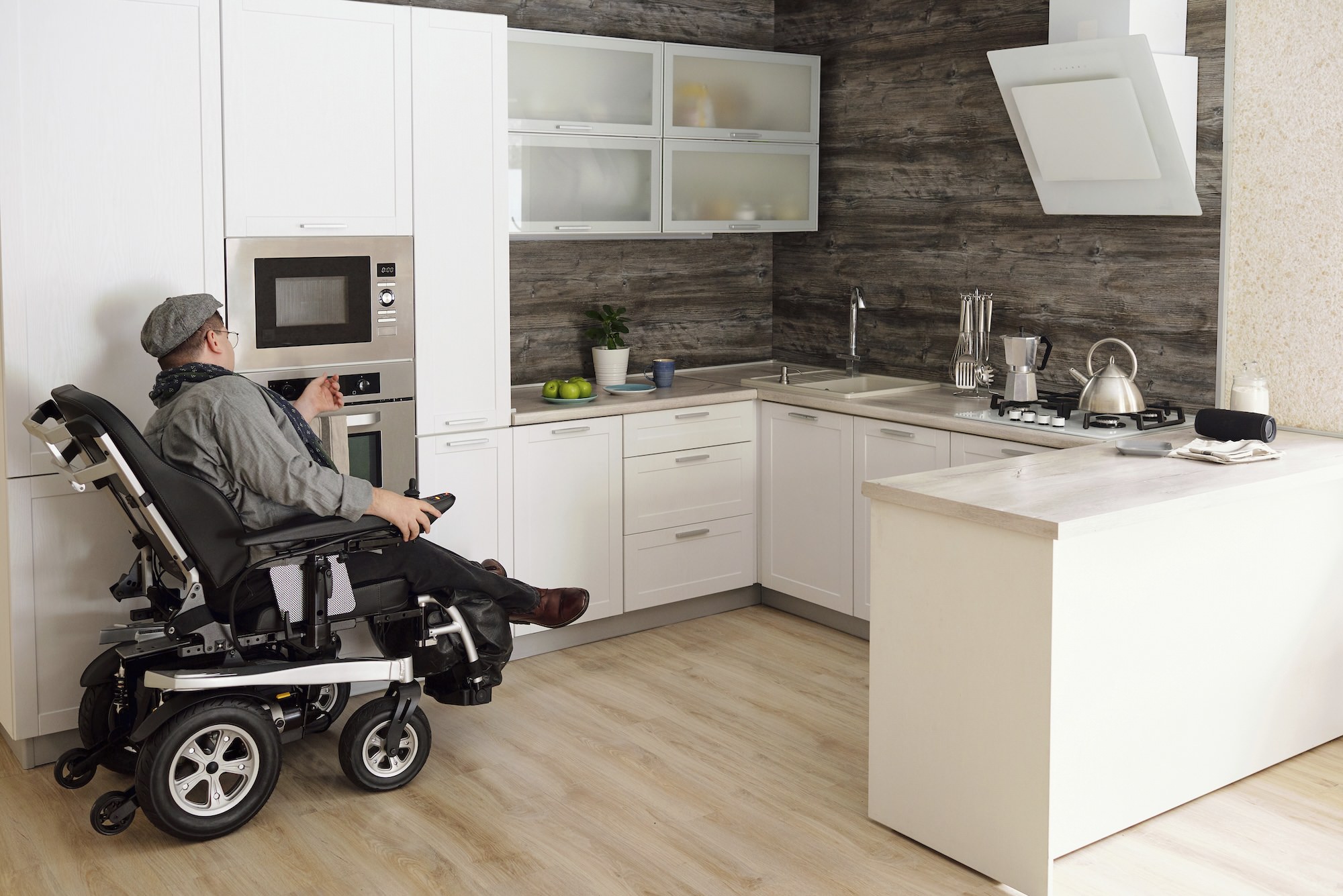
Before choosing lifting equipment, it helps to look at how well your home can support safe, comfortable movement. Small environmental adjustments can make equipment easier to use and improve day-to-day safety.
Bedroom: Is there enough space around the bed for safe movement, repositioning and equipment to turn?
Bathroom: Can equipment fit through the door, and is the shower or toilet area easy to access with slip-resistant surfaces?
Doorways and pathways: Are doorways wide enough, and are hallways free from clutter, tight corners or raised thresholds?
Flooring: Is the surface easy to move equipment across? Hard flooring allows smoother movement than carpet.
Storage: Do you have space to store larger equipment, or would a ceiling or integrated system help reduce clutter?
Lighting: Are key areas well lit so controls, slings and equipment positioning can be seen clearly?
General safety: Are there mats, cords or uneven surfaces that could increase the risk of tripping during transfers?
Reviewing these areas helps you identify what will work in your home and supports clearer conversations with equipment suppliers or healthcare professionals.
The NDIS Quality and Safeguards Commission’s Safe Use of Hoists practice alert emphasises that mechanical lifting equipment must be paired with safe preparation, clear communication and correct technique to reduce the risk of injury for both the person and the carer.
We have prepared a checklist to help carers plan, complete and troubleshoot transfers safely.
☐ Check the lifter, frame, hooks and attachments for any visible damage
☐ Confirm the sling type matches the person and the equipment
☐ Check the sling for tears, fraying or worn stitching
☐ Ensure the sling size is correct and clearly labelled
☐ Make sure the path is clear of clutter, cords and trip hazards
☐ Position the lifter so it can move in a straight, controlled line
☐ Ensure brakes (if applicable) are used correctly according to manufacturer guidelines
☐ Explain each step to the person to help reduce anxiety and maintain cooperation
☐ Attach sling loops to the correct attachment points
☐ Double-check all clips or loops before lifting
☐ Lift slowly and steadily – avoid quick or jerky movements
☐ Maintain communication throughout the transfer
☐ Stay within the equipment’s safe working load
☐ Keep the person centred and supported in the sling
☐ Ensure feet, hands and limbs remain clear of obstacles
☐ Stop immediately if the person shows signs of discomfort or sliding
☐ Ensure the person is safely positioned with appropriate posture and support
☐ Remove or adjust the sling only if clinically appropriate for the scenario
☐ Return the lifter to a safe storage position
☐ Put the battery on charge (for powered equipment)
☐ Clean high-touch surfaces as part of routine hygiene
☐ Know how to activate the emergency stop
☐ Practise using the manual-lowering feature (for powered systems)
☐ Keep the user manual accessible
☐ Report any equipment faults immediately
☐ Arrange servicing if the lifter makes unusual noises, feels unstable or sticks during movement
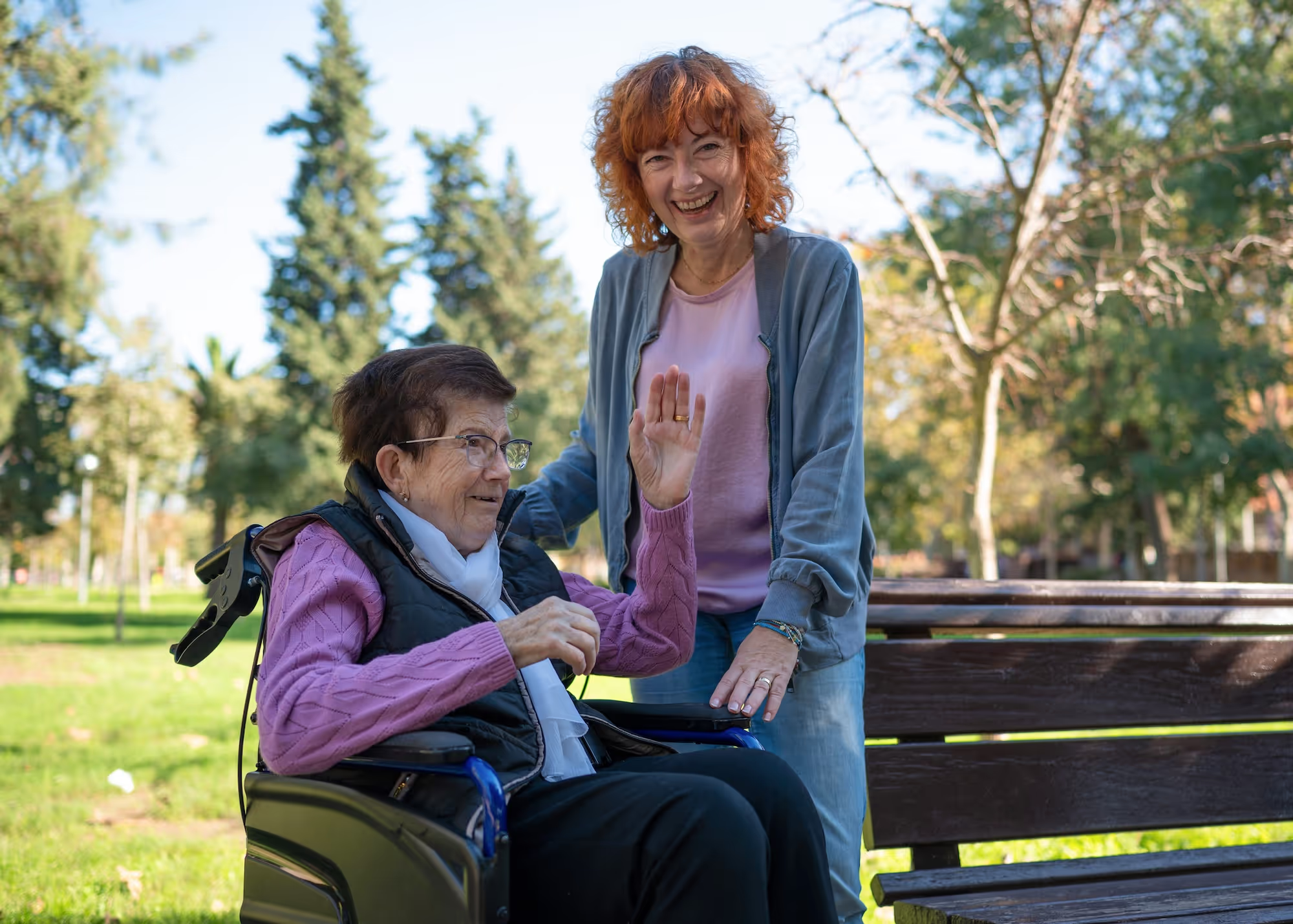
Safe lifting and movement underpin high-quality home care. The right equipment, used well and suited to the home environment, protects carers, reduces risk and supports independence.
Floor lifters, standing devices and ceiling-mounted hoists remain vital components of many care plans. Integrated systems such as Behn provide an alternative for families wanting a smoother, low-strain approach with fewer steps and less equipment, while still aligning with Australian safety and funding requirements.
Our guides offer clear, detailed explanations of key home-care decisions, combining expert insights with practical steps to help families plan safely and adapt as needs evolve.
Explore your options with a quote or a guide. Our team is here to help you understand what care at home could look like.